
The Gate of No Return
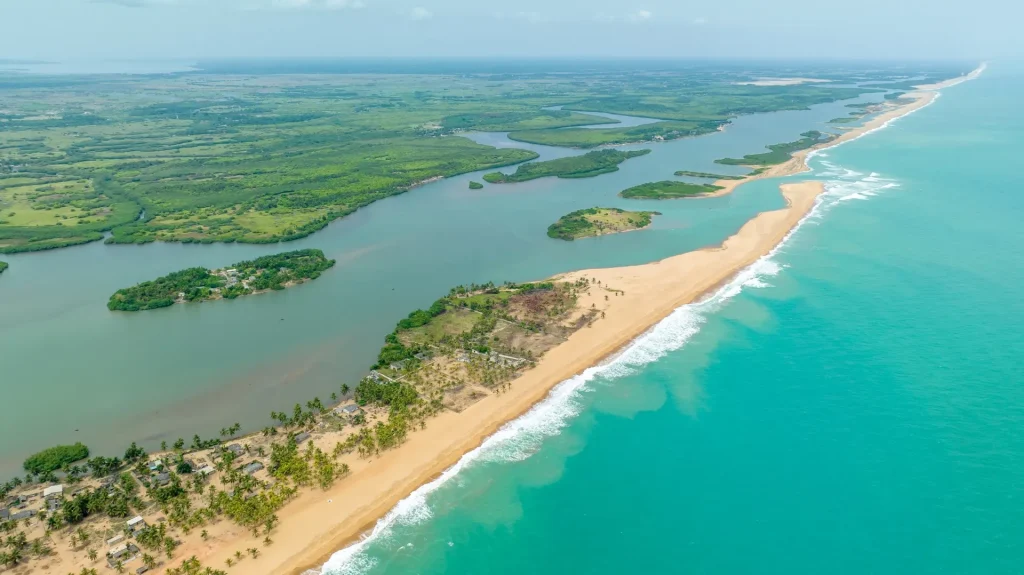
Standing facing the Atlantic, seventeen meters high, the Gate of No Return marks the final stage of the Route of the Enslaved, before boarding. The monumental arch rests on four pillars carved with bas-reliefs depicting gagged captives; its entablature is adorned with a frieze showing long columns of chained women, men, and children marching toward the ocean. Facing the horizon, it overlooks Ouidah Beach and ranks among the most iconic memorials in Benin, Africa, and the world.
A Gate Erected Facing the Ocean
The Gate of No Return commemorates the fate of the women, men, and children who were deported from the shores of Benin Bay to the Americas as part of the transatlantic slave trade. Erected in 1995 as part of UNESCO’s Slave Route Project and rebuilt and expanded in 2025, it invites visitors to remember one of the greatest tragedies in human history, while honoring the resilience of African peoples and their descendants. It has become a place of remembrance, reflection, and dialogue, where visitors, researchers, artists, and members of diasporas from around the world come together.
Those who have been here have never returned. You, however, can come back.

The experience
There isn't much to do here. It's the place that does the work.
Walk out to the beach. Stand facing the water. The sand, the heat, the sound of the waves: it all contributes to the memory, and the body remembers it before the mind does. The guides in Ouidah don’t recite a history lesson; they show you where the chains were fastened, where people were led down, and what happened at that exact spot. Then they fall silent and let whatever comes, come.
Some visitors arrive alone, on a silent pilgrimage. Others come with their children, to show them, explain, and pass on the tradition. Both approaches are valid. If your visit coincides with the commemorative ceremonies, you’ll see what Benin has made of this place: a place where people return, together.

Access conditions
- When to visit Every day
- Recommended duration 30 to 45 minutes
- Entry Free and open access
Free access, outdoor site. A guided tour is highly recommended, as a continuation of the Route of the Enslaved. Quiet reflection: groups are asked to keep noise levels down and refrain from staging photo shoots. Parking available.
Tailor-made stay
Contact Bénin Tours, the official Beninese tour operator dedicated to discovering the Benin destination.
Contact Bénin Tours (opens in a new tab, you'll be redirected to benintours.bj)
What's nearby?


 Coming soon
International Museum of the Memory of Slavery (MIME)
Coming soon
International Museum of the Memory of Slavery (MIME)
 Coming soon
Boat of Memory
Coming soon
Boat of Memory