

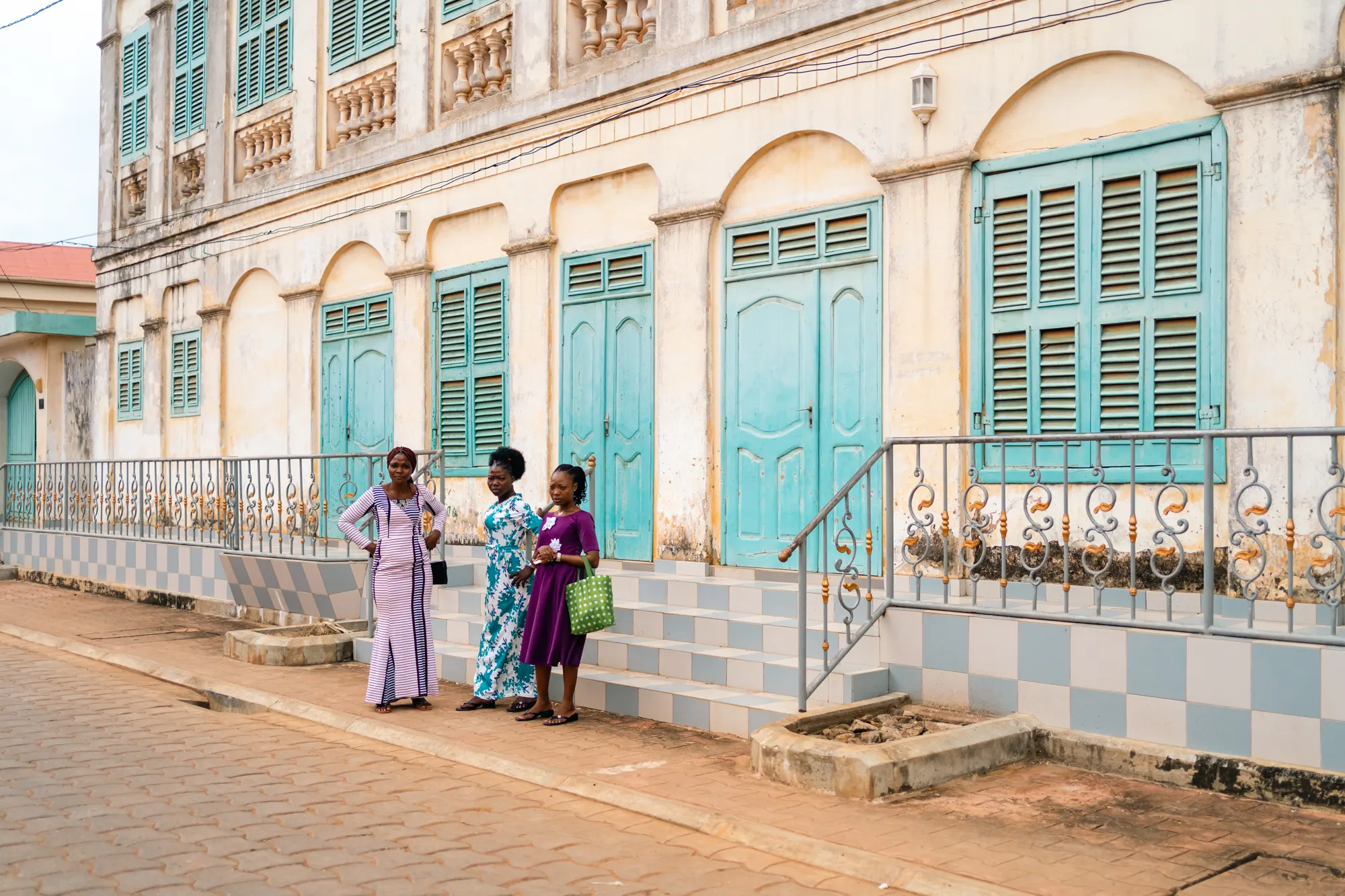
Explore Ouidah by bike, among Afro-Brazilian houses and colonial facades Metalwork, Plasterwork, and Family Memories
Walk or bike from neighborhood to neighborhood in the old city, where every street holds a surprise: a Vodun temple, a basilica, a Portuguese fort, or a house painted in the colors of Brazil.
One City, Many Eras
Ouidah has had many lives. The Xweda neighborhoods, the slave trade, Afro-Brazilian families, the colonial period: each era has left its mark on the streets. In the city center, the Temple of the Pythons stands across from the Basilica of the Immaculate Conception, a symbol of a city where different beliefs have long coexisted.
With a guide, whether by bike or on foot, you can explore at your own pace. A piece of wrought ironwork, a coat of plaster, an inscription: the guide teaches you to interpret these details that are easy to miss at first glance, and each stop adds another piece to the puzzle.
Highlights You Won't Want to Miss
- Xweda settlements: the art of building and shaping the city—discover a unique way of organizing space, where housing, spirituality, and social life are closely intertwined. Vodun altars, sacred trees, courtyards, squares, and small plazas give structure to the concessions and help shape an urban landscape rich in memories, practices, and meanings.
- Afro-Brazilian houses: With their balconies, wrought-ironwork, and colorful stucco, these homes reflect Ouidah’s ties to Brazil. Your guide will help you understand every detail.
- Traces of the colonial era: buildings and inscriptions evoke another chapter in Ouidah’s history, which the tour contrasts with the Xweda neighborhoods and sites associated with the slave trade.
- A historic home: step inside a house steeped in history. Its residents can tell you about its past, the changes it has undergone, and the family memories associated with it. An encounter that takes the visit beyond the facades.
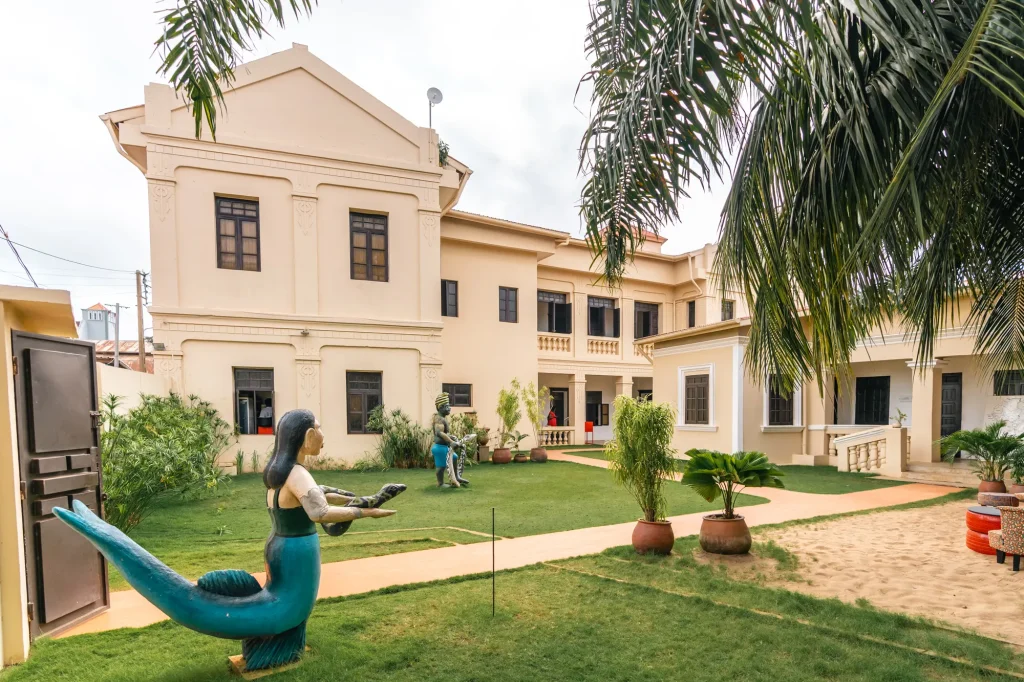
A City to Explore
Exploring Ouidah this way means seeing the city in a whole new light, street by street. A door, a courtyard, a smile—and an entire past comes to life. Hop on your bike, follow your guide, and let the city surprise you.